
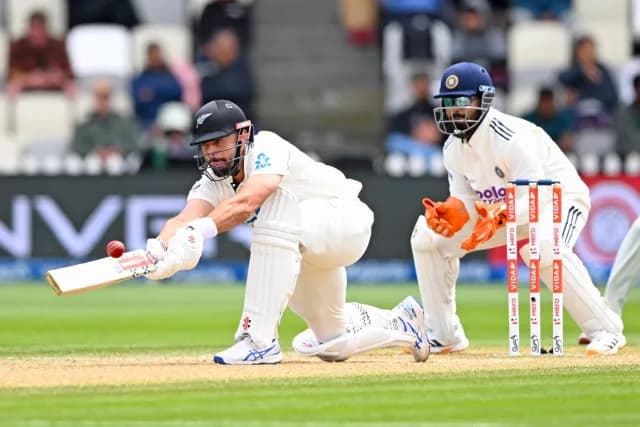
India and New Zealand played out a hard-fought draw in the Wellington Test after the stubborn Basin Reserve pitch offered little assistance to the bowlers throughout the match. Despite India's efforts to push for a dramatic victory in the final session, New Zealand successfully batted out 120 overs to secure a draw.
The result was a setback for India's hopes of reaching the ICC World Test Championship (WTC) final, while New Zealand slipped to third position in the WTC points table. India managed to collect four points despite conceding a massive 720 runs in the match.
New Zealand Batters Resist India's Bowling Attack
India began the final day needing eight wickets to secure an unlikely victory. However, New Zealand's batters showed tremendous patience and determination to deny the visitors a series of breakthroughs.
Devon Conway and Rachin Ravindra provided early resistance, extending their overnight partnership for more than 10 overs on the final morning. Washington Sundar eventually broke through by inducing an inside edge from Conway, who was caught by wicketkeeper Rishabh Pant after scoring a valuable contribution.
Rachin Ravindra continued to frustrate India's bowlers but eventually fell to Prasidh Krishna. Anshul Kamboj then produced an excellent delivery to dismiss Tom Blundell, giving India renewed hope of forcing a result before the new ball arrived.
Daryl Mitchell and Glenn Phillips Secure the Draw
With New Zealand still under pressure, Daryl Mitchell and Glenn Phillips produced a determined batting display to ensure their team avoided defeat.
The pair batted together for 43 overs, displaying remarkable concentration against India's bowling attack. Mitchell remained unbeaten on 49 after facing 186 deliveries, while Phillips scored an unbeaten 126-ball contribution.
Their partnership effectively ended India's hopes of taking all 10 wickets. The batters focused on defending their wickets rather than scoring quickly, frustrating the Indian bowlers with prolonged periods of defensive play.
New Zealand managed to survive the final session, with the match eventually ending in a draw.
India's Bowlers Miss Opportunities on a Flat Pitch
India's bowlers struggled to generate consistent movement throughout the final innings. The Basin Reserve surface offered minimal seam movement and showed very little deterioration, making it difficult to create wicket-taking opportunities.
Washington Sundar was among India's most effective bowlers, using drift to trouble the New Zealand batters. Prasidh Krishna and Anshul Kamboj also created opportunities, but the pitch conditions largely favoured the batters.
Jasprit Bumrah was used carefully as India managed his workload. He bowled a total of 49 overs in the Test and finished with five wickets, taking his career Test bowling average to 19.94.
New Zealand Show Patience to Deny India Victory
India continued searching for breakthroughs after the new ball was taken, but New Zealand's batters remained composed. Daryl Mitchell survived a close bat-pad opportunity, while India also missed a chance when Akash Deep failed to complete a fielding opportunity at mid-on.
As the partnership continued to grow, India gradually turned to other bowling options. Yashasvi Jaiswal and Dhruv Jurel were also given opportunities with the ball, indicating that the visitors were beginning to accept the likelihood of a draw.
With 15 scheduled overs remaining, both teams eventually agreed to end the contest. Mitchell, who was just one run short of his half-century, did not insist on continuing the innings.
Draw Deals Blow to India's WTC Final Hopes
The Wellington Test ended without a winner, with New Zealand's resilient batting and the unresponsive pitch playing decisive roles in the outcome.
India managed to take several important wickets on the final day but could not break the resistance of Mitchell and Phillips. The draw pushed India further away from contention for a place in the World Test Championship final, while New Zealand moved down to third in the standings.
Ultimately, the Basin Reserve pitch proved too difficult for the bowlers, as New Zealand's determined batting performance ensured that the five-day contest ended in a stalemate.