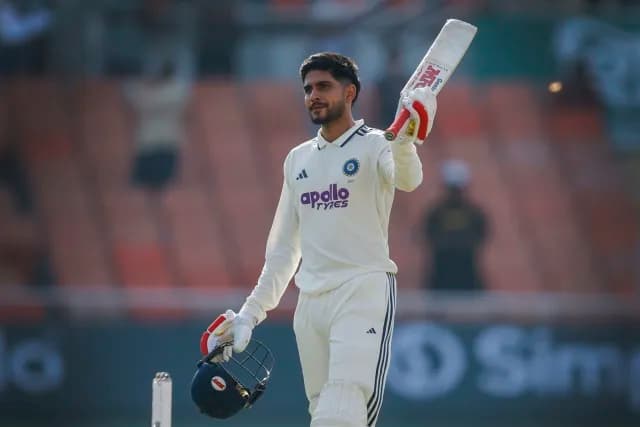
India captain Shubman Gill has called for the International Cricket Council (ICC) to reconsider its ban on using saliva to shine the cricket ball, arguing that the restrictions introduced during the COVID-19 pandemic are no longer necessary.
Speaking after India's first Test against New Zealand ended in a draw at the Basin Reserve in Wellington, Gill highlighted concerns over the quality of cricket balls, unresponsive pitch conditions and the challenges faced by bowlers in modern Test cricket.
Gill believes that allowing players to use saliva could help bowlers generate reverse swing and create more opportunities, particularly on pitches offering little assistance.
"We are way past Covid times. There was a rule that you can't put saliva on the ball to make it shine. It's been seven-eight years and I still don't understand why they are not allowing it. I think this is also a big factor," Gill said.
Gill Raises Concerns Over Cricket Ball Quality
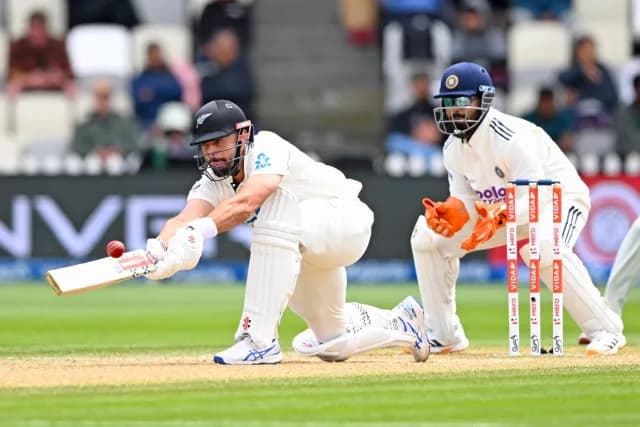
India struggled to dismiss New Zealand in the final innings despite having a substantial first-innings lead of 352 runs. The visitors managed only five wickets as the hosts batted for 120 overs to secure a draw.
Gill pointed towards the condition of the Kookaburra ball, claiming that it became soft after just 25 to 30 overs, making it difficult for India's fast bowlers to generate movement.
He also recalled similar concerns during India's Test tour of England, where the Dukes ball reportedly lost its hardness quickly during the opening matches.
According to Gill, when a pitch offers limited assistance and the ball becomes soft early, bowlers are left with very few opportunities to trouble the batters.
He explained that edges often fail to carry to the fielders, leaving bowlers largely dependent on dismissals through lbw and bowled.
The Indian captain also stressed the importance of improving the quality of cricket balls to ensure a fairer contest between bat and ball.
'There Was No Pace in the Wicket'
Gill admitted that India's bowlers had very little assistance from the Basin Reserve surface throughout the match.
Despite declaring their first innings with a lead of 352 runs and having approximately 135 overs to bowl New Zealand out, India could not force a victory.
The Indian captain said the pitch lacked pace and bounce, making it difficult for fast bowlers to generate enough pressure.
He also observed that even deliveries that stayed low were not quick enough to beat the batters.
Gill added that draws have become relatively uncommon in modern Test cricket, which makes such results particularly frustrating for teams accustomed to playing for outright victories.
Gill Explains Tough Decision to Drop Mohammed Siraj
Gill also addressed the decision to leave senior fast bowler Mohammed Siraj out of India's playing XI for the Wellington Test.
The Indian captain described the decision as extremely difficult, particularly because of his close personal friendship with Siraj.
Gill acknowledged Siraj's contributions to Indian cricket but explained that team selection was based on current form and the bowling options available for the conditions.
He revealed that he had personally informed Siraj about the decision before the match and explained the reasoning behind leaving him out.
According to Gill, Siraj understood the selection logic despite the disappointment of missing out.
The captain also expressed confidence in Siraj's ability to return strongly, highlighting his determination to work hard and perform for the team.
India Had Exhausted All Bowling Options Before Accepting Draw
Gill defended India's decision to end the contest with a draw after Daryl Mitchell and Glenn Phillips frustrated the bowling attack with a prolonged partnership.
India's fast bowlers had already bowled close to 50 overs each during the match, and the captain felt that asking them to continue for another 10 to 15 overs would not have changed the outcome.
He explained that the team had attempted different bowling combinations and strategies but failed to find enough assistance from the pitch.
Gill said India would have continued pushing for victory if the bowlers believed there was still an opportunity to dismiss the remaining batters.
However, with the surface offering virtually nothing, the team decided that extending the contest would serve little purpose.
Saliva Ban Debate Returns to Focus
Gill's comments have once again brought attention to the restrictions introduced during the COVID-19 pandemic, when the ICC prohibited the use of saliva to shine the ball over health and safety concerns.
Although players can still use sweat to maintain the ball, Gill believes that reinstating saliva could provide bowlers with an additional advantage and help restore the balance between bat and ball.
His remarks also highlight the growing concerns surrounding ball quality and unresponsive pitches in Test cricket.
As India look to improve their performances in challenging overseas conditions, Gill's call for changes to existing regulations could become an important talking point in international cricket.